Oil mist filters in industry: safely extract oil mist and control emissions

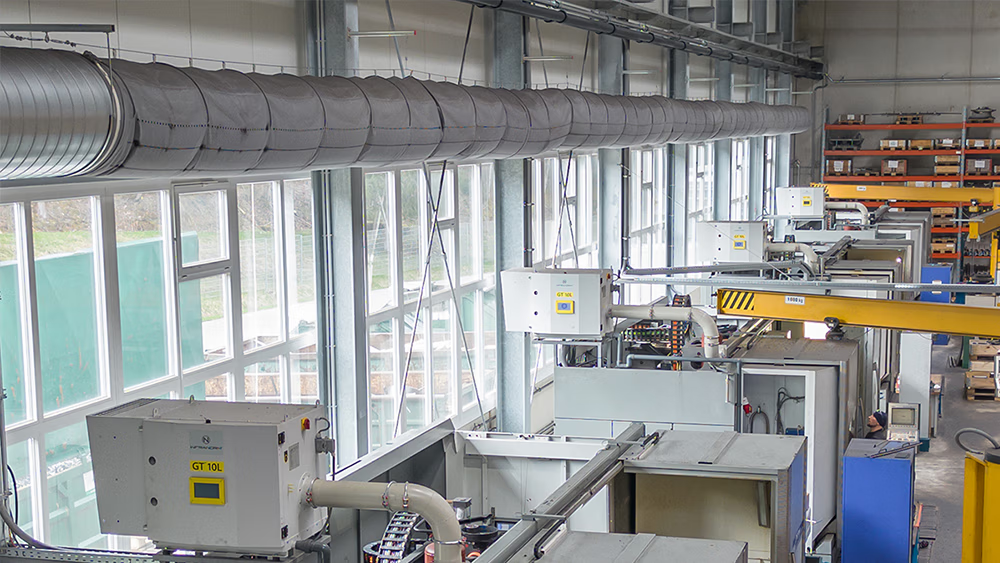
Oil mist is produced in numerous industrial manufacturing processes and is a relevant source of emissions from both an occupational health and technical point of view. In chipping applications in particular, the atomization of coolants results in aerosol-polluted air. A technically correctly designed Extraction and filter technology is therefore crucial for Work safety, plant availability and operating costs.
KEY FACTS: OIL MIST FILTER
- Oil fog is produced during cutting processes
- High cutting speeds increase emissions
- Oil mist and oil smoke differ significantly in particle size
- Incorrectly sized filter systems increase energy and maintenance costs
- Direct extraction at the point of origin is technically the most efficient
- Self-cleaning oil mist filters enable constant separation performance
WHAT IS OIL MIST?
Oil mist is an aerosol made from the finest oil or oil-water droplets that is produced when coolants are atomized. When turning, milling, grinding or drilling, lubricants hit rotating workpieces and are split into microscopically small droplets. The particles mix with air and spread around the hall without targeted extraction.
TECHNICAL DELIMITATION: OIL MIST VS. OIL SMOKE
Oil mist particles are usually larger than 1 micron. Oil smoke particles are produced during thermally intensive processes and are significantly smaller. This distinction is crucial for the selection of suitable oil mist filters, as fine particles place higher demands on filtration. A misinterpretation of the type of emission often results in shorter downtimes and increasing operating costs.
EFFECTS OF OIL MIST IN INDUSTRIAL BUILDINGS
Uncontrolled oil mist emissions result in:
- Deteriorated indoor air quality
- Exposure to the air you breathe
- Slippery work surfaces
- Contamination of machines and electronics
- Increased maintenance and cleaning costs
In addition to occupational safety, oil mist has a direct impact on technical infrastructure and operating costs.
TECHNICAL SOLUTION: DIRECT EXTRACTION OF OIL MIST
The most effective measure is extraction directly at the point of origin. This prevents the aerosol from spreading around the room. The oil-containing air is led via pipes to a central or decentralized filter system and purified in several stages.
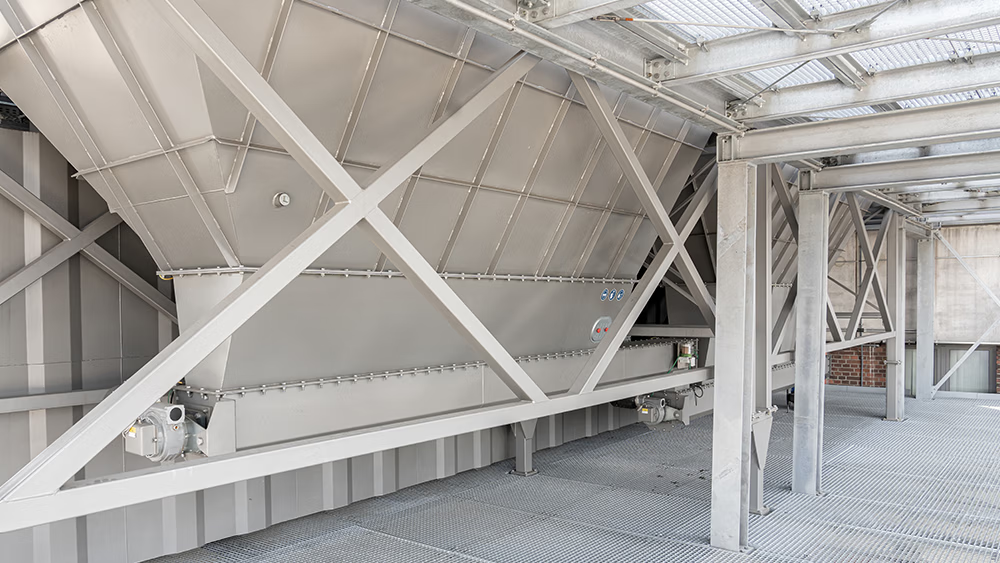
Modern systems enable:
- Recirculating air mode with low residual emissions
- Seasonal switching between recirculating air and exhaust mode
- Recirculation of separated coolants
- Adapting the extraction capacity to changing operating conditions
More about holistic Extraction and filter technology for industrial applications find out here.
REQUIREMENTS FOR MODERN OIL MIST FILTERS
Industrial applications require filter solutions with:
- Consistently high separation efficiency (up to 99.97%)
- Stable suction capacity regardless of the degree of contamination
- Long downtime
- Low maintenance
- Intelligent vacuum control
Self-cleaning fiberglass drainage filters enable almost maintenance-free operation while reducing energy consumption.
RELEVANCE FOR INDUSTRY AND COMMERCE
Production halls and processing centers combine high internal heat loads with aerosol-intensive processes. An insufficiently designed air filter system results in:
- Increasing electrical connection capacities
- Unnecessary energy losses
- Shorter filter life
- Increased network load
Oil mist filters are therefore not an isolated individual device, but part of a systemically planned industrial air purification system.
CONCLUSION: OIL MIST REQUIRES PRECISELY DESIGNED FILTER TECHNOLOGY
Oil mist is an unavoidable by-product of modern manufacturing processes. However, it can only be controlled with technically correctly dimensioned oil mist filters.
For industrial companies, this means:
- Analyze emission sources precisely
- Differentiate oil mist and oil smoke
- Start extraction directly at the process
- Design filter technology to be energy-efficient
Just a holistic Extraction and filter technology ensures stable operating costs, high plant availability and legally compliant emission values in the long term.
FAQ
What is an oil mist filter?
An oil mist filter is an industrial filter system that separates aerosols from cooling lubricants from the air and thus reduces emissions.
Where do high oil mist concentrations occur?
Especially for turning, milling, grinding and other cutting processes with high cutting speeds.
Why is the distinction between oil mist and oil smoke important?
Oil smoke particles are significantly finer and place higher demands on filter technology.
Can purified air be returned to the hall?
Yes, provided that the residual emission is sufficiently low and legal limits are met.