Heat Wave in the Production Hall: Now Is the Time to See How Well Your Infrastructure Really Works

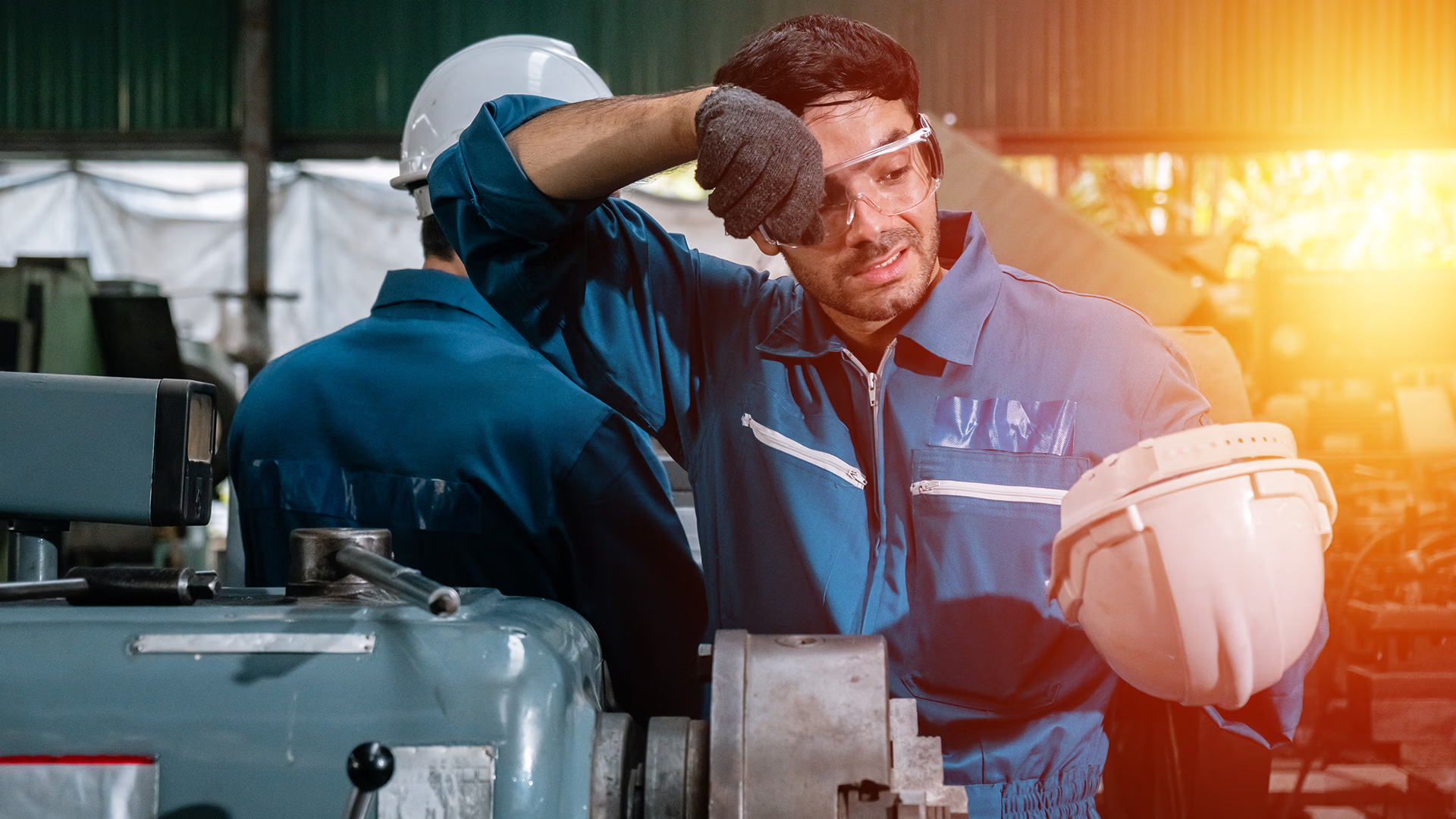
The current heat wave is pushing many production facilities to their limits. But the heat is rarely the actual problem. Rather, it reveals where production facilities had already reached their thermal limits beforehand.
When temperatures exceed 30 degrees for several days in a row, employees, machinery, and processes come under additional strain. Many companies are now scrambling to find quick solutions. They purchase portable air conditioners, set up fans, or install additional cooling capacity on short notice.
That seems logical. However, this is often where the fallacy lies. After all, heat waves rarely cause thermal problems on their own. Rather, they reveal where production facilities had already reached their limits beforehand. Those who now focus exclusively on installing additional cooling capacity are often merely treating the symptoms. The underlying causes remain - and resurface with every new heat wave.
KEY FACTS: HEAT REVEALS VULNERABILITIES
- Heat waves expose existing thermal vulnerabilities.
- Additional cooling capacity often only addresses the symptoms.
- Process heat increases the thermal load inside the facility.
- Airflow determines the actual cooling effect.
- Facility geometry and building design have a significant impact on the indoor climate.
- Sustainable solutions begin with a systematic analysis.
- Proper preparation reduces energy consumption and operating costs.
WHY PRODUCTION FACILITIES REACT DIFFERENTLY TO HEAT
Not every production facility reacts the same way to high outdoor temperatures. While some locations maintain stable conditions even on very hot days, others reach their limits after just a few hours. The difference rarely lies solely in the outside temperature. Rather, the decisive factor is how well the production facility is prepared for thermal stress. Machines continuously generate process heat. Production processes alter airflow patterns. Buildings store heat to varying degrees, and the fresh air supply also influences temperature behavior inside the facility. When these factors come together, they create a complex overall thermal system.
That is exactly why it is important not to view production facilities in isolation - in terms of heating or cooling alone - but to understand them as an integrated system.
THE TYPICAL FALLACY: MORE COOLING CAPACITY MUST SOLVE THE PROBLEM
When temperatures rise, attention often turns immediately to cooling. Additional cooling capacity seems to be the most obvious solution. In the short term, this can certainly make sense. In the long term, however, this approach often falls short. This is because if airflow patterns, process heat, or the hall’s geometry remain unchanged, any additional cooling capacity must continuously work against the same underlying causes. The result is rising energy consumption and higher operating costs.
WHY A HEAT WAVE UPSETS THE BALANCE OF THE HALL'S CLIMATE
High outdoor temperatures combine with existing heat sources inside production facilities. Machinery emits process heat. Warm air accumulates beneath the facility’s roof. Fresh air brings additional heat into the building. At the same time, airflow patterns and thermal loads change. This creates temperature zones that even high-performance cooling systems cannot fully balance. Those who focus exclusively on the installed cooling capacity often overlook these interrelationships.
HEAT AFFECTS MORE THAN JUST THE ROOM TEMPERATURE
High temperatures do not only affect employees’ well-being. Production processes can also be highly sensitive to thermal stress. Rising temperatures affect machinery, material properties, and production quality. At the same time, employees’ ability to concentrate often declines, while physical strain increases. The economic impacts therefore extend far beyond energy consumption.
WHY SHORT-TERM MEASURES RARELY HELP IN THE LONG RUN
Fans, portable air conditioners, or additional chillers can provide short-term relief. However, they rarely address the root cause. After every heat wave, the same cycle begins anew. Rising temperatures lead to increased cooling capacity, higher energy consumption, and rising operating costs. In addition, stricter regulatory requirements for traditional refrigeration technology are expected in the future.
THE REAL OPPORTUNITY LIES AFTER THE HEAT WAVE
A heat wave clearly highlights where thermal vulnerabilities exist within a production facility. That is precisely why it’s worth viewing these insights as more than just a short-term summer problem. They provide valuable clues as to where processes, airflow, energy flows, or building structures can be improved. Many companies then reinvest in individual systems. Yet the greatest potential for improvement often lies between the systems.
CONCLUSION FOR DECISION-MAKERS
The current heat wave will pass. What remains are the insights into the thermal vulnerabilities of your own production facility. Those who rely exclusively on short-term cooling measures now will face the same challenges again next summer. Those who, on the other hand, use the heat wave as an opportunity to take a holistic look at their production infrastructure will lay the foundation for consistently stable production conditions.
It’s not the heat wave that determines how well a production facility functions; it merely reveals how well it is prepared. The next heat wave is sure to come. Whether it becomes a problem, however, is decided long before it arrives.
FAQ
Why do production facilities heat up so quickly during a heat wave?
High outdoor temperatures combine with additional internal heat sources in production facilities - such as machinery, production processes, and the building itself. Depending on airflow patterns, the facility’s geometry, and the fresh air supply, heat can accumulate to varying degrees. As a result, production facilities can react very differently even when outdoor temperatures are the same.
Are fans or portable air conditioners enough to solve the problem?
They can provide temporary relief, but they usually do not address the root cause. If airflow, process heat, or the building structure remain unchanged, these measures must be implemented again during every heat wave and often lead to permanently higher energy consumption.
Why is additional cooling capacity often not the best solution?
More cooling capacity can be useful if there is actually an additional need for cooling. However, thermal problems are often caused by inadequate airflow, unused process heat, or a lack of coordination among technical systems. Without taking these factors into account, additional cooling often only treats the symptoms.
What impact does heat have on manufacturing facilities?
High temperatures can worsen working conditions, place a greater strain on employees, and affect process stability. At the same time, energy consumption and operating costs often rise when additional cooling measures are required on short notice.
What Should Companies Do After a Heat Wave?
A heat wave provides valuable insights into thermal vulnerabilities within a production facility. Rather than implementing only short-term measures, it is worthwhile to conduct a comprehensive analysis of airflow, process heat, energy flows, and building structure. This approach can help achieve stable production conditions and greater energy efficiency in the long term.
How can companies better prepare for future heat waves?
The best time to analyze a production facility is immediately after a heat wave. That’s when thermal vulnerabilities become particularly apparent. By optimizing airflow, process heat, energy flows, and building structure early on, companies can create stable production conditions while reducing energy consumption for future summers.