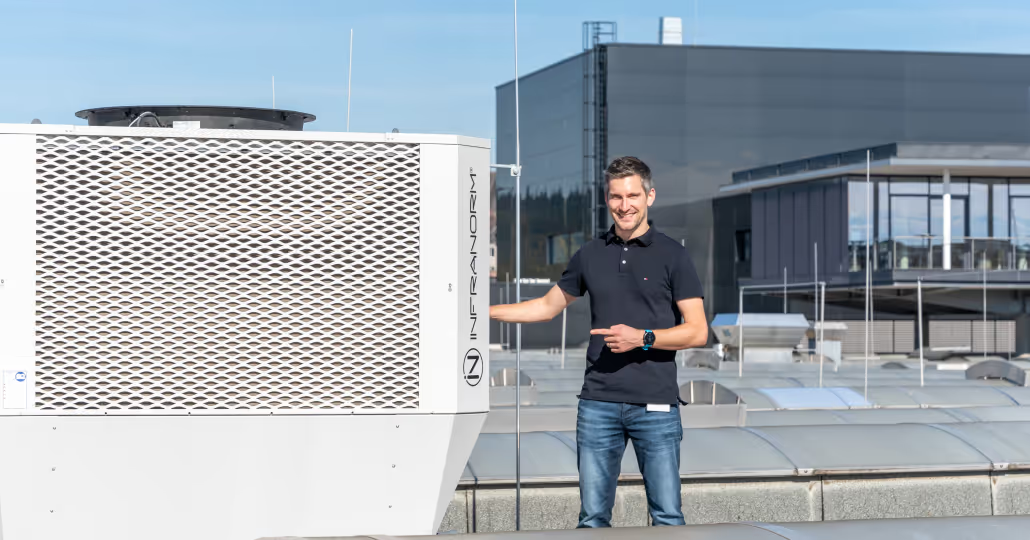
Specialist portal energie:bau reports on passive measures and cooling strategies for industrial buildings
that Energy:Bau specialist portal In a recent article, highlights how climate change is affecting the energy requirements of industrial buildings and which measures are necessary to meet future requirements.
For technical decision makers in industry, the article provides practical insights into passive measures such as night ventilation and climate-adaptive concepts.
Key facts about the press release
- Medium: Energy:Bau specialist portal
- output: 01/2026
- technology: Sustainable Hall Conditioning
- Editor's online portal: energie-bau.at
The project in detail
The publication focuses on scientific work and practical results on energy-efficient cooling from industrial buildings. The concepts discussed in the article reflect the challenges posed by climate change and the changing ratio of heating to cooling energy demand.
The press report focuses on:
- Passive measures such as night ventilation as an energy-efficient strategy to reduce daily cooling requirements
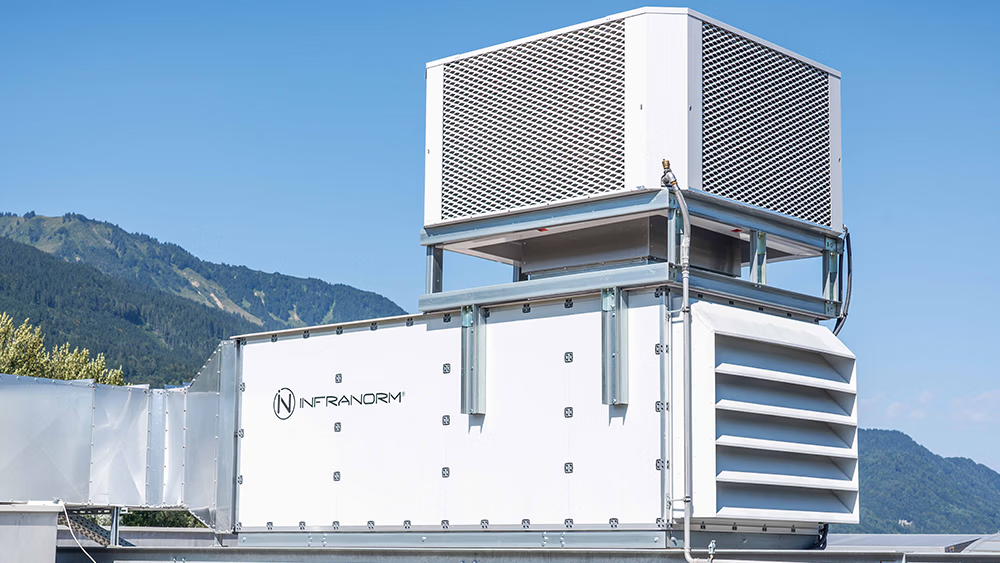
- Two-stage adiabatic cooling as a technology-driven solution for sustainable temperature management without refrigerant
- Economic and environmental benefits: lower electricity consumption and CO₂ reductions compared to traditional systems
- hybrid solutions supplemented by small compression chillers for operational safety in various climate zones
- practical examples, which show how innovative cooling concepts can make the use of large chillers superfluous
Why this approach is revolutionizing industry
The approach described in the press article marks a fundamental change of perspective in indoor air conditioning. Instead of focusing on maximum technical performance, the focus is on demand-oriented, climate-adaptive concepts. Passive measures such as night ventilation reduce thermal loads in advance and thus reduce the amount of cooling energy required.
In combination with adiabatic cooling systems The result is a robust overall concept that does not require conventional refrigerants and requires significantly less electricity than conventional solutions. Scalability is particularly relevant for industry: Cooling capacity is not provided as a lump sum for the entire volume of the hall, but is based on actual usage and work zones.
For manufacturing companies, this means more than just saving energy. The approach increases planning and operational safety under changing climatic conditions, reduces dependencies on energy-intensive refrigeration technology and helps companies to implement regulatory requirements and sustainability goals economically. This turns hall air conditioning from a cost factor to a strategic element of industrial infrastructure.
About the specialist portal energie:bau
that Energy:Bau specialist portal is a German-language specialist portal that deals with topics related to energy, building management systems, construction projects and technical innovations in the construction and building services sector. Editorial contributions provide information on sustainable technologies, energy-efficient systems and practical examples of modern construction and production infrastructures.