
Year-round hall cooling for metal and plastic production at MKW
MKW produces high-quality metal and plastic products for the domestic and European economy at its Weibern site. Processes such as laser cutting, CNC machining, injection molding, powder coating, and wire processing generate high internal heat loads. In combination with solar heat gains, this led to uncomfortably high temperatures in the summer months. The aim of the project was to supply permanent workplaces with pleasantly tempered fresh air all year round and at the same time ensure production reliability and low operating costs.
Please give your targeting consent to watch this video. By doing so, you agree that when you play the video, data will be transmitted to YouTube and collected by this provider.
Give targeting consent
- sector: Plastics production and processing
- customer: MKW Kunststofftechnik GmbH
- location: Weibern, Austria
- Category: Sustainable Hall Conditioning
- solution: Economical cooling, heat recovery, ventilation, Pre-cooling and retrofit
- KPIs: Fresh air flow rate of up to 100 percent clean, cooled fresh air for the press shop, 83 % savings in energy costs, 89 % CO₂ reduction compared to traditional solutions, 100 % prevention of ventilation heat losses
- Year of execution: 2023
Project details
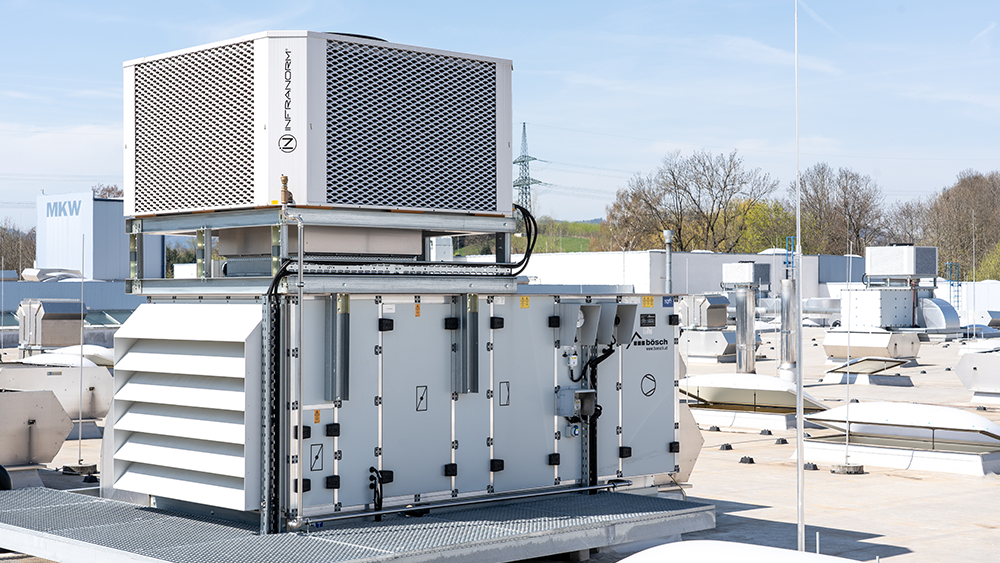
For MKW, five Sustainable Hall Conditioning Systems wereinstalled: one single-stage adiabatic pre-cooling for an existing ventilation system and four systems with two-stage adiabatic cooling for the various production areas. Due to the dust generated, the press shop is operated exclusively with fresh air. In injection molding, wire manufacturing and powder coating, recirculated air mixing ensures year-round operation without additional heating costs.
The process waste heat can be used to bring in maximum fresh air even at cold outdoor temperatures. A central feature is the vacuum system in the press shop, which reliably prevents dust from being carried over to adjacent areas. Textile air tubes with individual laser perforations bring the supply air to every workplace in a draft-free and targeted manner.
The result: Optimum indoor climate at all permanent workplaces, higher employee satisfaction, less heat inputs and energy-efficient operation across all production lines.
“Two-stage adiabatic cooling with fresh outdoor air cooling of up to 17 °C was one of the main reasons for choosing Sustainable Hall Conditioning. The adjustable vacuum in the press shop area is extremely important in order to safely prevent the transfer of dust produced during production to other production areas. ”

Robert Wimmer
Press Technology Production Manager, MKW Kunststofftechnik GmbH
The customer company
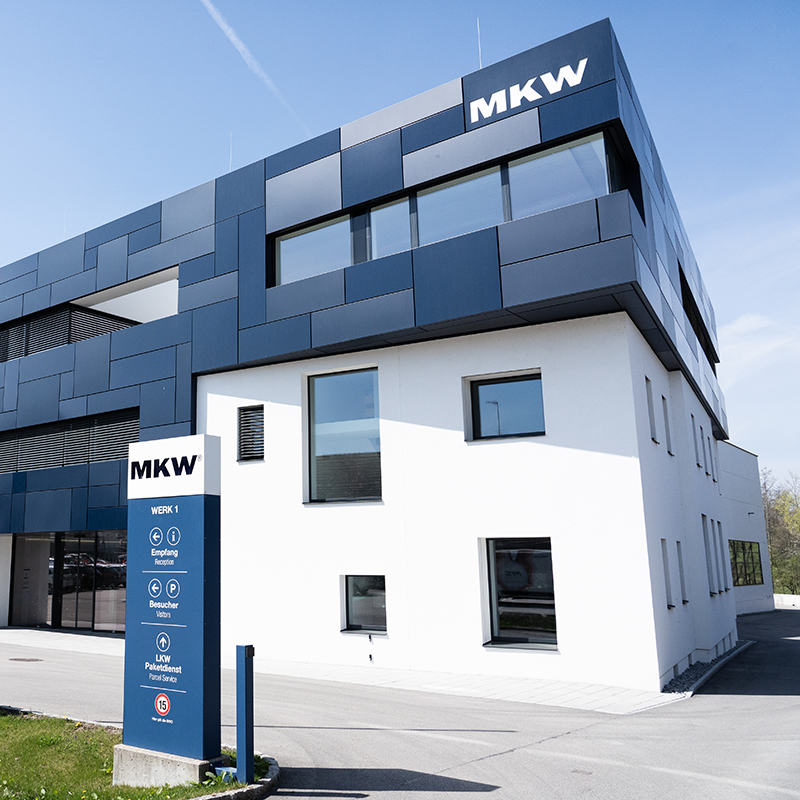
MKW is an internationally active company in the fields of plastics technology, pressing technology, surface and wire processing. MKW Kunststofftechnik is one of Europe's leading technological manufacturers of toilet seats and processes thermoplastics and duroplastics using injection molding and pressing processes. MKW Oberflächen+Draht manufactures individual wire products and offers high-quality powder coating and surface finishing for industrial and consumer goods.
Learn more about this project
Download the best practice PDF for this project now – simply fill out the form and receive even more information.
synopsis
The project at MKW shows how flexible and modular Sustainable Hall Conditioning improves production conditions sustainably. INFRANORM® has met the complex requirements of a wide range of manufacturing areas with a scalable, energy-efficient and operationally reliable solution.
The profit for MKW:
- Comfortable temperature at permanent workplaces all year round
- up to 100 % cooled fresh air in sensitive areas
- 89 % CO₂ reduction
- 83 % reduction in operating costs
- no climate-damaging refrigerants
- maximum flexibility for future production adjustments
In short: Sustainable, safe and future-proof hall conditioning for a wide range of production processes.