
Sustainable Hall Conditioning for machine manufacturing at ENGEL
ENGEL Austria GmbH operates a production hall built in the 1970s in Schwertberg, whose indoor climate showed significant stress before the start of the project. It was cold in winter, hot in summer and there was not enough fresh air supply. This led to difficult working conditions and affected both employees and machines. INFRANORM® was commissioned to conduct a comprehensive analysis of the situation and implement a sustainable solution to improve the indoor climate throughout the entire hall - based on Sustainable Hall Conditioning, which was nominated for the 2024 Energy Globe Award in the “Air” category.
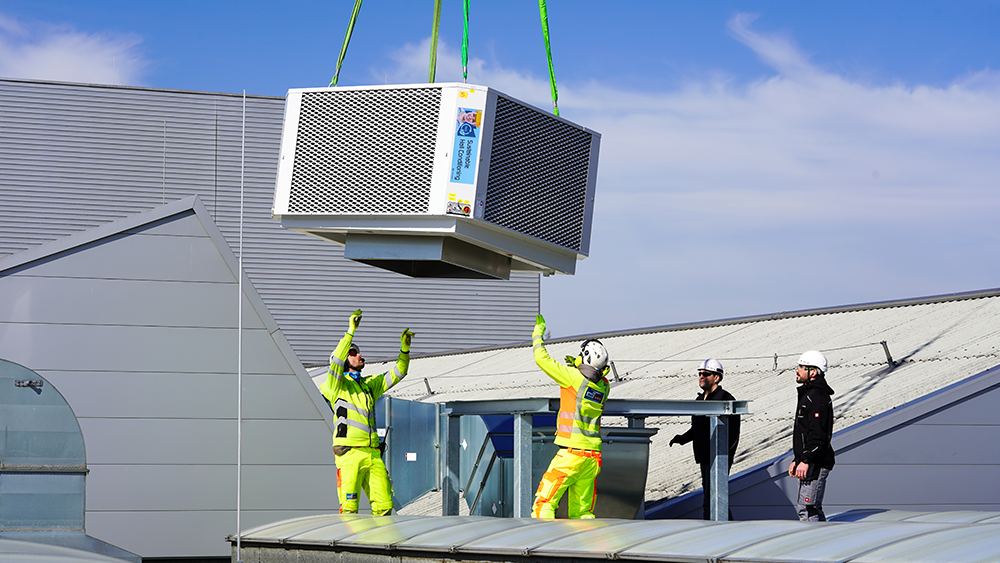
Please give your targeting consent to watch this video. By doing so, you agree that when you play the video, data will be transmitted to YouTube and collected by this provider.
Give targeting consent
- sector: Plastics production and processing, mechanical engineering, steel construction and plant engineering
- customer: ENGEL Austria GmbH
- location: Schwertberg, Austria
- Category: Sustainable Hall Conditioning
- solution: Economical cooling, Heat recovery, Airing, Heating, Indoor air purification
- KPIs: Fresh air flow rate of up to 70,000 m³/h, 79% savings in energy costs, 82% CO₂ reduction compared to traditional solutions
- Year of execution: 2023
Project details
For ENGEL, a modular Sustainable Hall Conditioning Solution implemented that ensures pleasant temperatures and stable air quality all year round. At high outdoor temperatures, outdoor air is passed through a two-stage adiabatic cooler and cooled down in an energy-efficient manner without compression cooling. During the transitional period, a mixed air unit controls fresh and indoor air.
At low outdoor temperatures, free cooling ensures low-energy operation, while at very low temperatures, a heating coil heats the air to ensure a stable climate. The air distribution was planned in 3D. Combinations of textile supply hoses, source air outlets and electric long-throw nozzles ensure draft-free supply of the entire width of the hall.
The integration into the existing building structure was carried out in a space-saving manner. All systems were transported to the roof of the hall by helicopter to minimize production downtimes. The system was fully integrated into the building management system and equipped with remote maintenance.
The result: A significantly more pleasant working environment, optimized air quality and a sustainable reduction in operating costs.
“I only received positive feedback from my team. It was definitely the right step to install such a system.”

Matthias Holzer
Team leader final assembly of protective grille, ENGEL Austria GmbH
The customer company
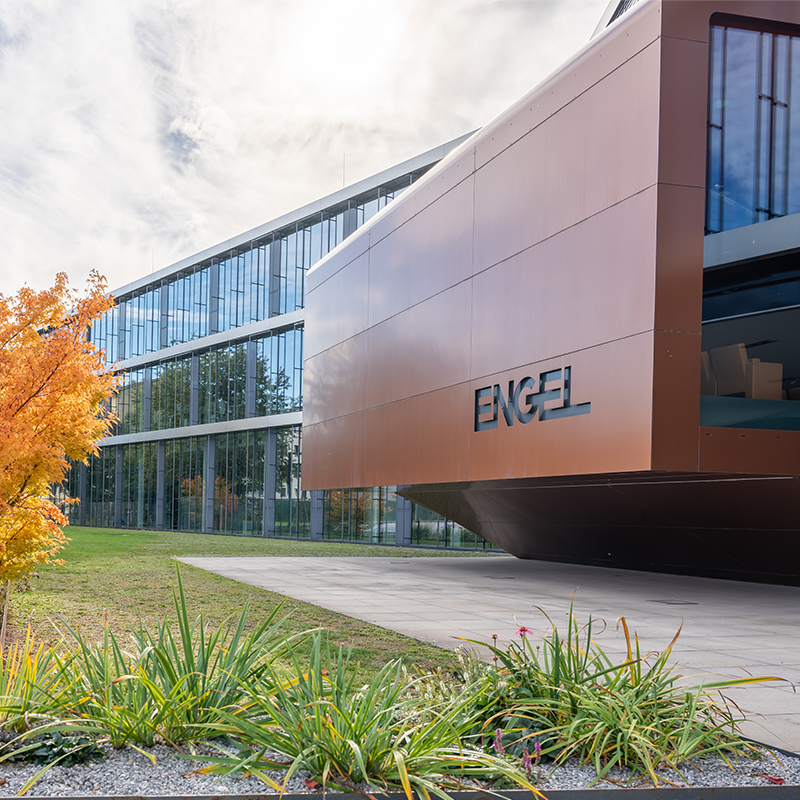
ENGEL is one of the world's leading manufacturers of injection molding machines and automation solutions. Founded in 1945, the family-owned company employs around 7,400 people and sets international standards in plastics processing, mechanical engineering and digitalization. ENGEL has a clear sustainability strategy and achieved platinum status in the EcoVadis sustainability ranking in 2023, putting the company among the top 1 percent of all rated industrial companies worldwide.
Learn more about this project
Download the best practice PDF for this project now – simply fill out the form and receive even more information.
synopsis
The project at ENGEL impressively demonstrates how modern hall conditioning sustainably improves working conditions, energy efficiency and air quality in existing production buildings. INFRANORM® has successfully implemented the challenge of modernizing a hall building that has grown over decades with a sophisticated combination of adiabatic cooling, mixed air technology and intelligent air distribution.
The profit for ENGEL:
- Noticeably more pleasant working environment
- Fresh air flow rate up to 70,000 m³/h
- 79 percent reduction in operating costs
- 82 percent CO₂ reduction compared to traditional solutions
- Integration without interrupting production
In short: An energy-efficient, modern and sustainable solution for a sustainable production environment.