Increasing cooling demand: causes, effects and technical classification

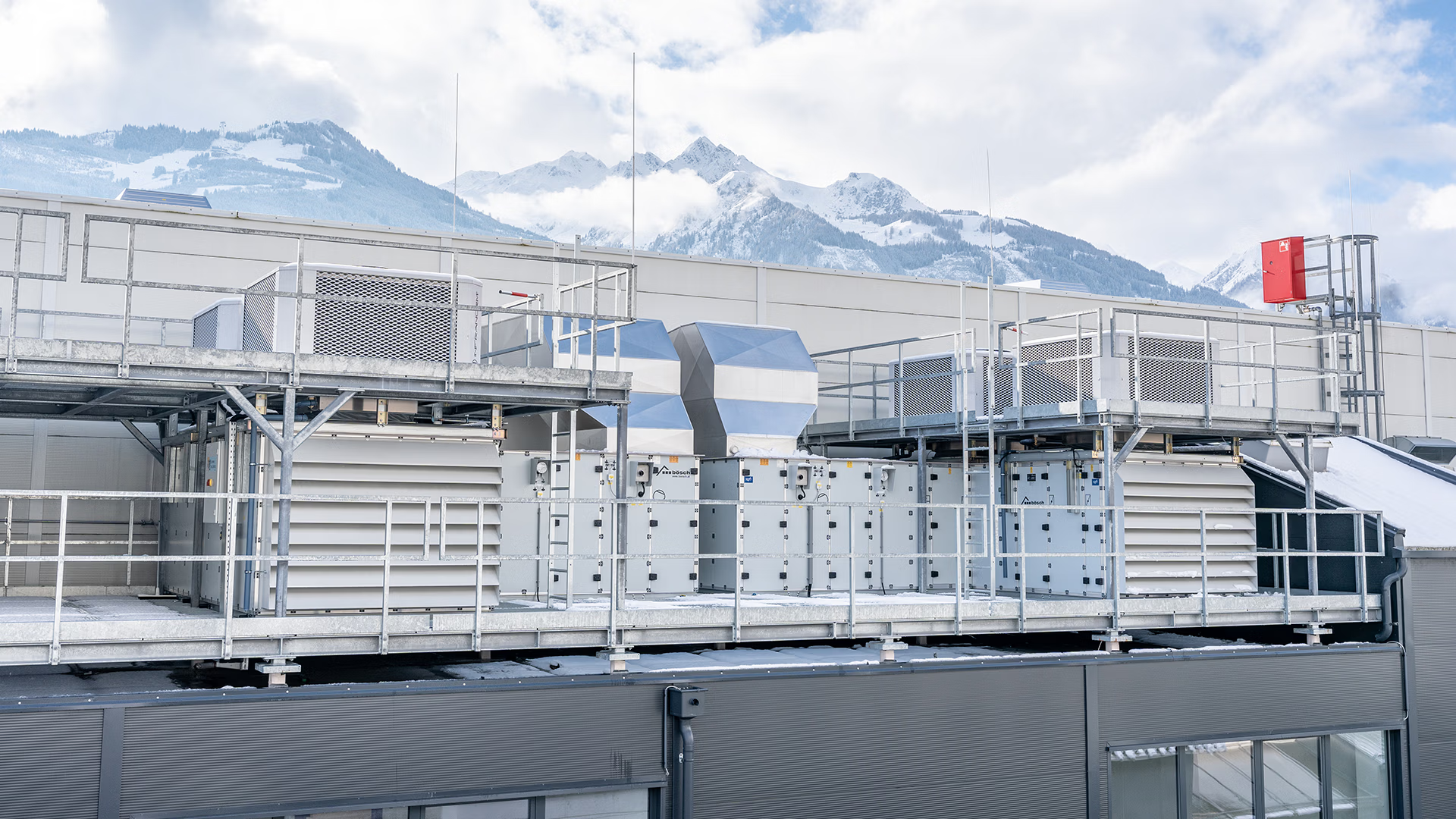
The Cooling requirements of buildings has been steadily increasing for years. Longer periods of heat, increasing internal heat loads and higher requirements at thermal comfort As a result, cooling is increasingly becoming a relevant factor for energy consumption, operating costs and supply security. The increasing cooling demand This applies not only to residential buildings, but increasingly also to industrial and commercial buildings.
KEY FACTS: INCREASING COOLING DEMAND
- The cooling demand of buildings increases in the long term
- Climatic changes and internal heat loads are key drivers
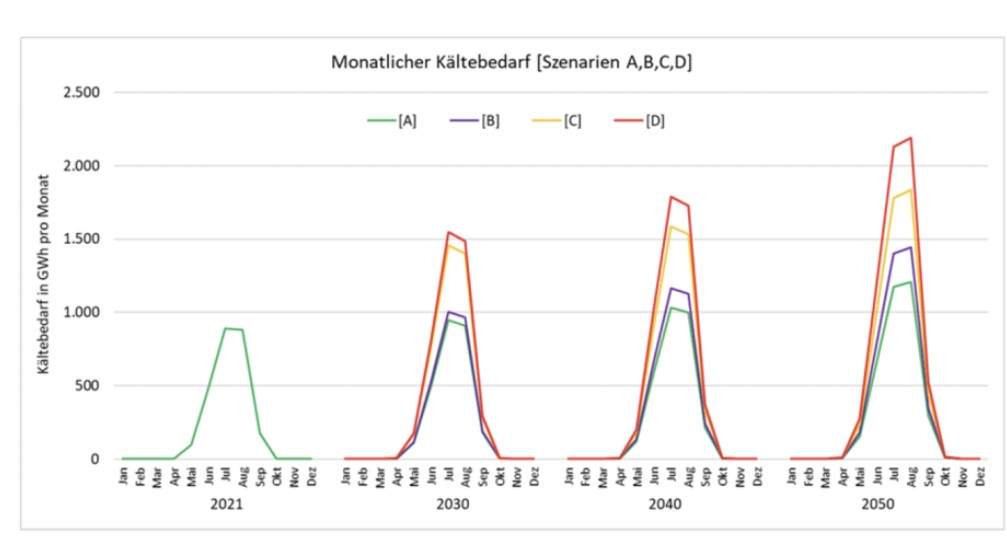
- Cooling energy demand is heavily concentrated over a few summer months
- Industrial and commercial buildings are becoming significantly more important when it comes to cooling requirements
- Building quality and technical design have a significant influence on cooling requirements
- Increasing cooling demand is affecting grids, energy prices and operating costs
WHAT DOES “INCREASING COOLING DEMAND” MEAN TECHNICALLY?
Cooling demand describes the amount of energy required to keep rooms, buildings or processes within defined temperature limits. A increasing cooling demand This is technically reflected not only in higher annual energy volumes, but above all in increasing peak loads during hot periods.
In particular, the following are relevant:
- which temporal concentration of cooling demand
- which Simultaneous use of many cooling requirements
- which required electrical connection power
- which Design of ventilation and cooling systems
CAUSES OF INCREASING COOLING DEMAND
Climatic changes
More frequent hot days and longer periods of heat mean that buildings heat up more and cool down less at night. As a result, both the average internal temperatures and the time during which active cooling is required rise.
Urbanization and densification
Densified construction, high glass content and sealed surfaces increase the heat input into buildings. At the same time, natural shading and nighttime cooling decrease, which further increases cooling requirements.
Internal heat loads
In industrial and commercial buildings, internal heat loads are constantly increasing due to machines, production processes, IT infrastructure and lighting. These loads act independently of the outside temperature and permanently increase the basic cooling requirement.
Increasing comfort and process requirements
Temperature requirements have become significantly stricter in many applications. Areas that were once considered thermally uncritical now require stable temperature control to ensure working conditions, process quality and plant availability.
CLASSIFICATION OF CURRENT STUDIES
Recent studies in building and energy research confirm this development. studies show that the cooling energy demand of buildings will continue to increase in the coming decades, in particular as a result of rising outdoor temperatures and growing internal heat loads. For Austria, too, research points out that refrigeration will account for a significantly larger share of the total energy demand of buildings in the future.
For industry and commerce, this means that cooling can no longer be regarded as a seasonal issue, but as a side issue structural component of energy and plant planning will.
PARTICULARLY RELEVANT FOR INDUSTRY AND COMMERCE
While the focus has long been on cooling requirements in residential buildings, industrial and commercial buildings are becoming increasingly important. Production halls, logistics centers and technical areas combine large volumes of space with high internal heat loads.
Increasing cooling requirements often result in:
- high electrical connection ratings
- increasing operating costs
- limited expandability of existing systems
- increased costs for network connections and load management
EFFECTS ON ENERGY SUPPLY AND OPERATION
The increasing demand for cooling has an impact not only on individual buildings, but also on entire energy system. High simultaneous cooling capacities in the summer months put a strain on power grids and increase the demand for peak load capacities.
For operators, this means:
- increasing sensitivity to electricity price fluctuations
- higher operational safety requirements
- growing importance of energy-efficient and low-load cooling concepts
TECHNICAL APPROACHES TO LIMIT COOLING REQUIREMENTS
Increasing cooling requirements cannot be controlled by more powerful systems alone. A combination of structural, operational and technical measures is decisive.
These include:
- Optimizing the building envelope and sun protection
- Reduction of internal heat loads
- adapted ventilation and air flow concepts
- Use of energy-efficient cooling processes
The aim is to avoid cooling requirements, reduce load peaks and cover remaining demand as efficiently as possible.
THE IMPORTANCE OF SUSTAINABLE COOLING CONCEPTS
Winning against the backdrop of increasing cooling demand Cooling concepts are important, which limit energy consumption and reduce peak electrical loads. procedures that without classic compression cold Getting by or supplementing them sensibly can help to reduce electricity consumption.
At the same time, the absence of synthetic refrigerants reduces dependence on regulatory requirements, particularly in connection with F-gases. However, a factual classification remains important: Sustainable cooling concepts are not a universal solution, but offer a technically and energetically viable alternative in many industrial applications.
CONCLUSION: INCREASING COOLING DEMAND REQUIRES NEW TECHNICAL ANSWERS
The increasing demand for cooling is not a short-term phenomenon, but a structural development. For industry and commerce, this means Cooling as an integral part of building and energy technology to look at.
Technically sound, energy-efficient and systemically designed concepts will be decisive for keeping increasing cooling demand manageable without disproportionately increasing energy consumption, network load and operating costs
FAQ
What is meant by increasing cooling demand?
This is the increasing amount of energy required to keep buildings, rooms or processes within allowable temperature limits.
Why is increasing demand for cooling increasingly affecting industrial buildings?
Industrial buildings combine high internal heat loads with large room volumes and increasing requirements for process stability and working conditions.
What role does building quality play?
Building envelope, glazing, shading and ventilation concepts have a decisive influence on the amount and distribution of cooling requirements over time.
Can technical systems completely compensate for increasing cooling requirements?
Technical systems can limit cooling requirements and cover them more efficiently, but they do not replace a holistic view of buildings, use and energy supply.