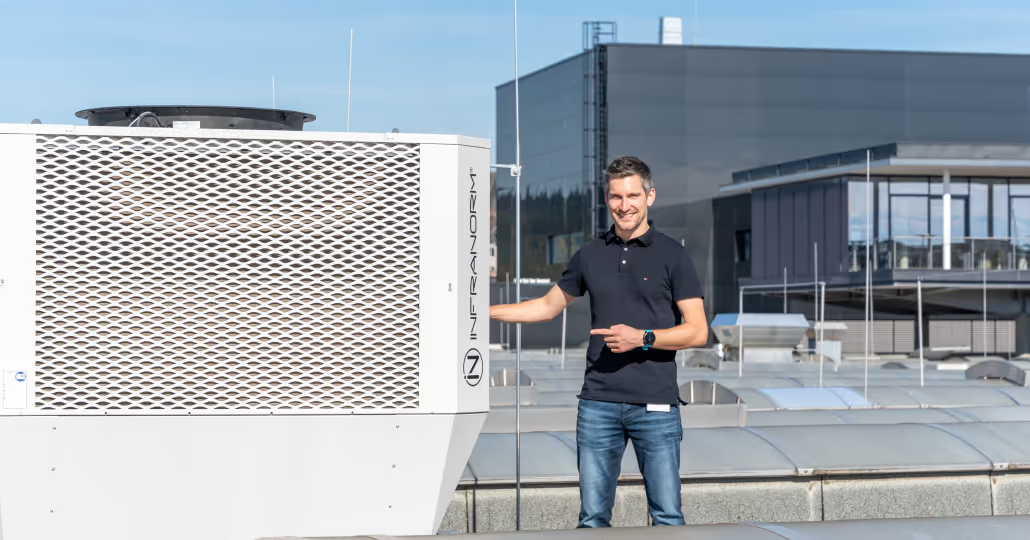
Industrial ventilation system: requirements, functions and technical classification

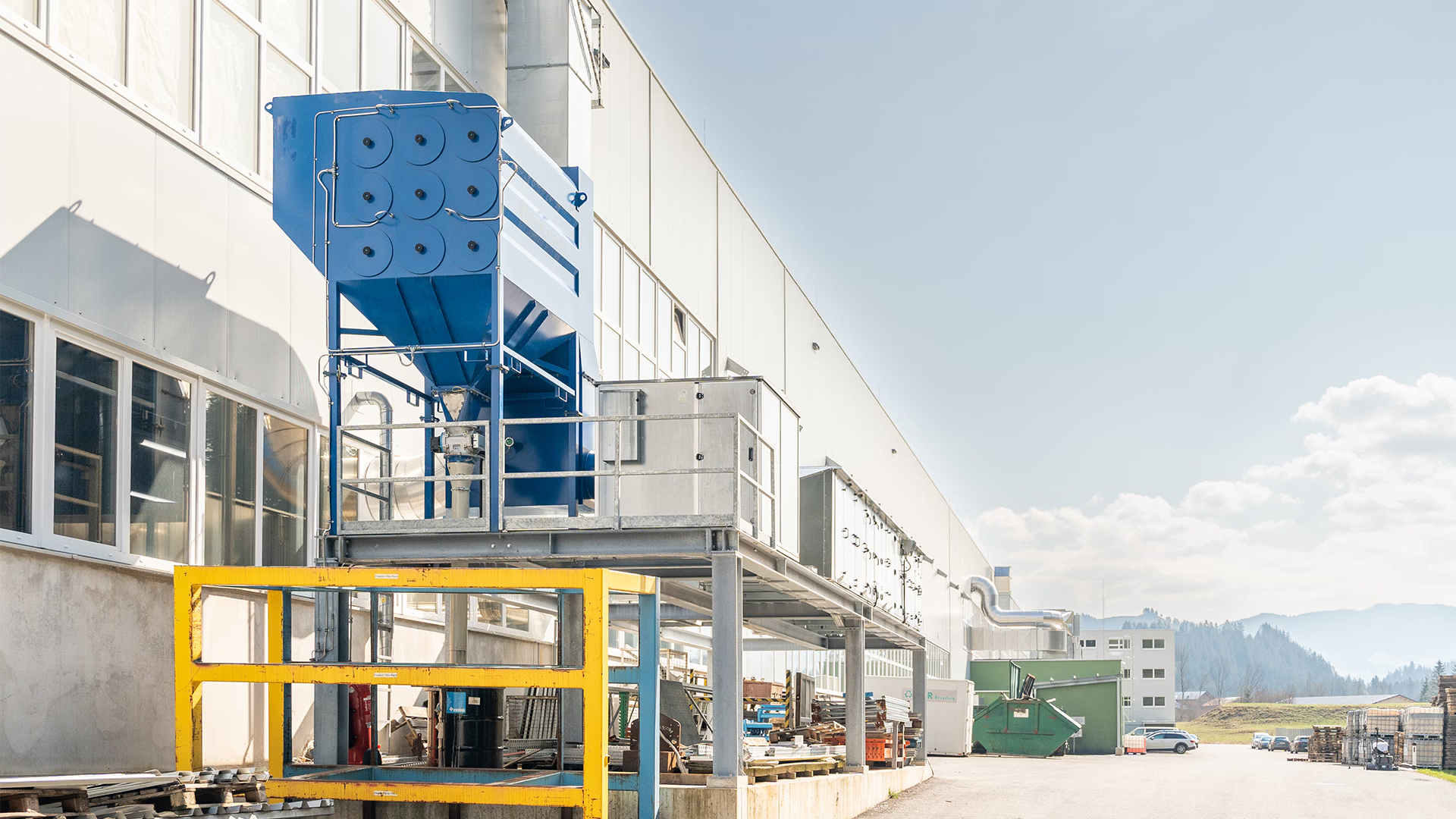
The requirements for industrial ventilation systems have changed significantly in recent years. Increasing internal heat loads, stricter requirements for Worker protection and a growing focus on energy efficiency mean that a Industrial ventilation system must do much more today than simply exchange air. Modern ventilation systems for industry are integral part of building and plant technology and have a significant impact on operational safety, energy consumption and production quality.
KEY FACTS: INDUSTRIAL VENTILATION SYSTEM
- Industrial ventilation systems are Part of the technical building infrastructure
- Requirements result from Production processes, air pollution and worker protection
- Air quality, air flow, cooling load, heating load and flow rate are central design parameters
- energy efficiency Wins by heat recovery, direct waste heat recovery and system integration in importance
- Ventilation systems in industry must robust, scalable and reliable being
- Die Integration into holistic hall conditioning systems increases
WHAT IS A VENTILATION SYSTEM IN INDUSTRY?
One Ventilation system for industry Is used by controlled supply and removal of air in production, logistics and technical areas. In contrast to simple ventilation solutions in residential or office areas, the focus in industry is not on comfort, but on Ensuring defined technical and hygienic conditions in the foreground.
Industrial ventilation systems perform several functions simultaneously:
- removal of heat, moisture and polluted air
- Ensuring an adequate supply of fresh air
- Protecting employees and assets
- Stabilization of process and production conditions
REQUIREMENTS FOR VENTILATION TECHNOLOGY IN INDUSTRY
Process-related requirements and air pollution
Production processes often result in increased air pollution in the hall. An industrial ventilation system ensures that polluted air is reliably removed, diluted or removed from the work area. The design is based on process type, hall geometry, existing heating and cooling load and required air exchange rates.
Worker protection and air quality
A central goal of industrial ventilation technology is Protecting employees. Requirements for temperature, air velocity, humidity and air quality must be met. A uniform, low-draft air flow plays a decisive role here.
Thermal loads and energy
A central field of activity industrial ventilation is the removal of internal heat. Machines, processes and lighting generate high heat loads, which can be carried along, distributed or used for energy purposes via the ventilation system.
TECHNICAL CHARACTERISTICS OF INDUSTRIAL VENTILATION SYSTEMS
Outdoor air and exhaust systems
Classic ventilation systems remove stale air and replace it with fresh air. The correct design of volume flows is crucial in order to reliably record emissions and at the same time limit energy consumption.
Recirculating and partial air systems
In many industrial applications, recirculated air portions are used to reduce energy losses. This requires suitable air treatment, in particular filtration and, where appropriate, temperature or humidity control.
Ventilation systems with heat recovery
heat recovery or direct use of waste heat is becoming increasingly important in industry. The energy contained in the exhaust air can be used to preheat or pre-cool the supply air. As a result, heating and cooling energy requirements are significantly reduced, particularly at high air exchange rates.
FROM INDIVIDUAL SYSTEM TO INTEGRATED SYSTEM
In industrial practice, ventilation systems are increasingly no longer viewed in isolation. Instead, they are part of integrated systems that airing, refrigeration, heating and air purification connect with each other. Such integrated hall conditioning systems enable:
- coordinated regulation of air volume and temperature
- the use of synergies between ventilation, cooling and heating
- a reduction in energy consumption and peak loads
The ventilation system plays a central role in this, as it controls air transport and distribution in the building.
SIGNIFICANCE FOR ENERGY EFFICIENCY AND SUSTAINABILITY
Ventilation systems significantly influence the energy consumption of industrial buildings. Without suitable measures, high air exchange rates result in correspondingly high heating or cooling capacities.
By:
- heat recovery
- direct waste heat recovery
- Use of innovative technologies, such as two-stage adiabatic cooling
- needs-based regulation
- intelligent system integration
- technically sound interpretation and calculation
Can the Significantly reduce energy consumption. Wear at the same time modern ventilation systems helps to limit the use of compression refrigeration and reduce regulatory dependencies, for example in the area of synthetic refrigerants.
CONCLUSION: INDUSTRIAL VENTILATION SYSTEM AS PART OF AN OVERALL SYSTEM
One Industrial ventilation system It is now much more than a technical ancillary system. It is a central element of production infrastructure and influences energy consumption, occupational safety and process stability in equal measure. For technical decision makers, this means not looking at ventilation systems in isolation, but as Part of holistic concepts to Hall conditioning. This is the only way to meet increasing requirements for energy efficiency, sustainability and operational safety in the long term.
FAQ
What is the difference between an industrial ventilation system and an office ventilation system?
Industrial ventilation systems are designed for high volume flows, process-related air loads and continuous operation.
What role does heat recovery play in ventilation systems in industry?
Heat recovery significantly reduces heating and cooling energy requirements, particularly at high air exchange rates, and is now a central component of energy-efficient ventilation concepts.
Can industrial ventilation systems be combined with cooling systems?
Yes In integrated hall conditioning systems, ventilation, cooling and, where appropriate, heating are considered and controlled together.
Can an existing ventilation system be retrofitted?
In many cases, yes. A prerequisite is a suitable design of the air flow, the flow rates and the structural conditions.